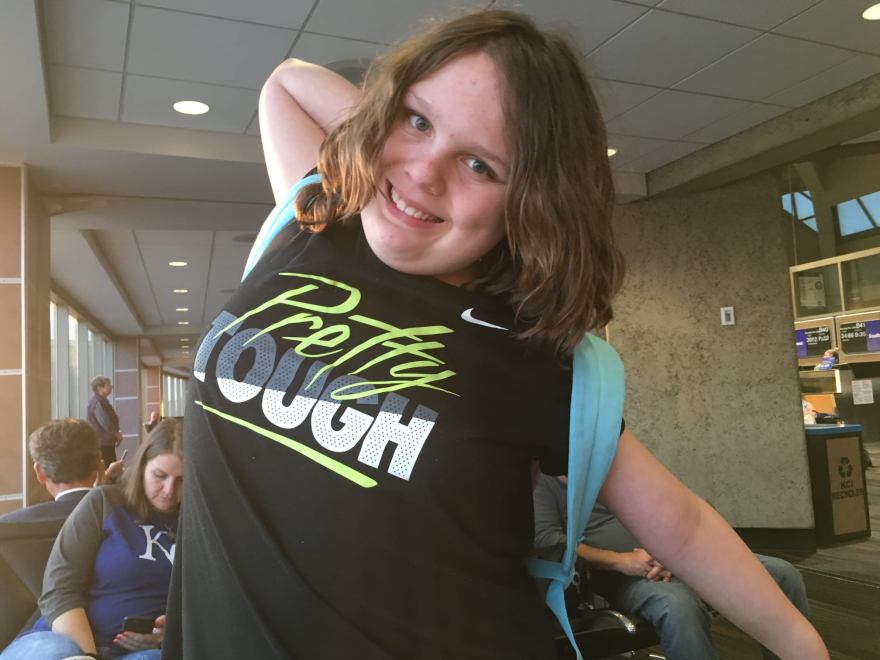
One of the joys of teaching elementary general music in a public school is that you teach every child. And one of the challenges is that you teach EVERY CHILD. Every child with a myriad of abilities and lived experiences. And for every child, there have to be strategies to get them engaged and active in music. Even if they are selectively mute, or in a wheelchair or autistic at any and every point on the spectrum. We teach EVERY child and the joy comes from finding ways to help every child share themselves through music.
Most music educators I know don’t do this by themselves. It is a team effort with special education professionals, classroom teachers and paraeducators that help the student be successful. I’ve always been so fortunate to have paraeducators who become so involved with their students that they participate with them in music class and it is magical. So much of it has to do with the expectations of the adults that surround this child – we expect that child to give as much effort as possible no matter the level of their abilities.
You may notice I did not say DISability. I have learned over the years that students with varied abilities will figure out unique ways to do what other students can do. So many times they know themselves so much better than I do, despite my good intentions. I learned to leave one of my students alone who, with one hand, not only tied his own shoes in 1st grade, but helped his friends tie theirs. When it came to playing instruments, I would leave it up to him as to how it would work best for him. You should have seen him play cello in 4th & 5thgrade.
My non-verbal student in his wheelchair could only laugh and smile when his para would tap the beat or rhythm on his arm and help him “dance” in his wheelchair. His demeanor completely changed when he came into our room. The child who struggled to walk would insist on getting up and with help would sing and dance to the music, clapping with excitement. He was such a joy and he made everyone want to join with him.
Autistic students have difficulty in social situations and most don’t like things sprung on them, but I’ll never forget parents crying when their autistic son, who had difficulty speaking up in class, sang his little part by himself in the 3rd grade play. These students are such an inspiration not only to others in class, but to me as well. They remind me that I should never be the barrier between my students with different abilities and what they can do.
So many times when we talk about DEIA (Diversity, Equity, Inclusion and Access), we forget to consider these students. They are perfectly capable of learning through connecting, responding, creating and performing music, it may just look a little different. It’s up to us as teachers to figure out the best pathway to take to help them achieve. This became especially clear when I met a student named Bea. I had never met a child like her before in my teaching career. I didn’t understand her expressive reactions to things, often misinterpreting her “flapping” to be her frustrations or anger and not her excitement. Thank goodness for her paras who were with her all the time who kindly helped me interpret and come to find out, she loved music. Not only did she love it, she understood it. She learned to count and read and write music notation. She sang with her class and moved to the music. As a 5th grader, she joined her classmates on Saturday field trips to watch opera streamed from the Met. She understood the storylines and recognized the music. She dressed up and sat through three hour operas better than most adults I know and she had a ball.
Soon after, she left to go to middle school, and I left shortly after that to open another school on the other side of town, losing touch with her. She had certainly captured my heart as well as others in our little school community. As the years passed, she would enter my thoughts occasionally, and I actually used a picture of her attending the opera in one of my conference sessions. That picture with the big smile, her arms spread in excitement, has a special place in my memory. It was that same picture I remembered when I saw on social media that she had passed away suddenly last week. My heart and so many other’s hearts are broken. Such a sweet girl.
When the obituary came out, here’s what jumped out at me:
Beatrice was a sophomore at … where she was active in the marching band, pep band and color guard.
She was still doing music.
Music is for EVERY child, can make a difference for EVERY child of every ability, and in the lives of those who work with children. What I learned from her and what she was capable of changed how I worked with all children after that. There are no limits, there are just different pathways.
 A Music Teacher's Mid-Life Musings